

- Home »
- Resources »
- Instruction Manuals »
- Turbos »
- Turbo Oil Leaks
Turbo Oil Leaks
Turbochargers operate under extreme conditions, reaching speeds of up to 360,000 RPM and relying on a constant supply of clean oil. When oil leaks occur, they can quickly lead to catastrophic failure, often within seconds if not addressed.
Understanding and resolving oil leaks requires a system-wide approach, not just inspection of the turbocharger itself.
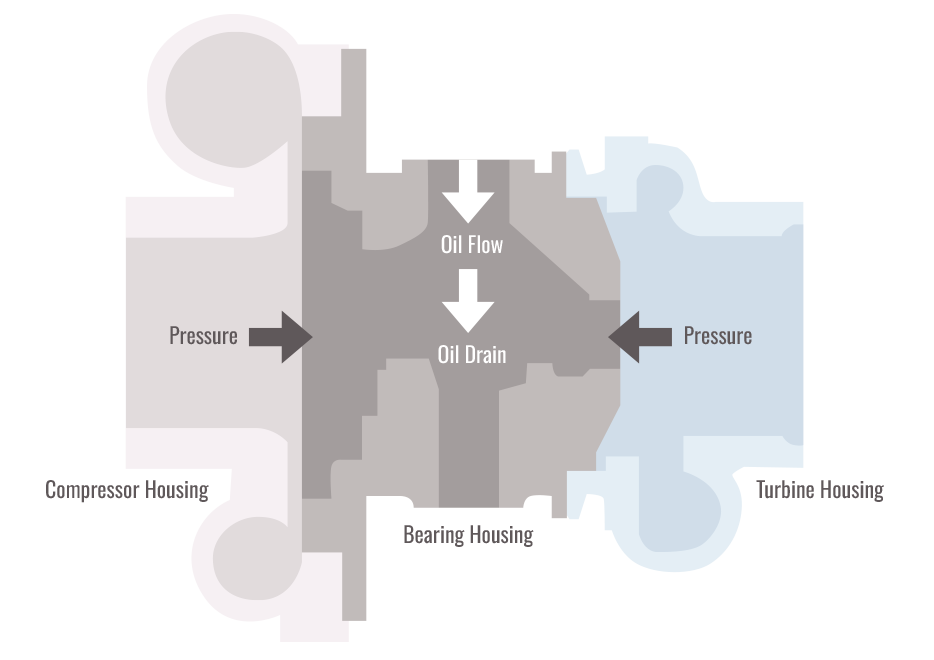
Core Principle: Pressure Controls Sealing
- Piston rings
- Bearing housing and flinger geometry
- Internal pressure in compressor and turbine housings
Correct pressure in both housings = No oil leaks
Even if all components are in good condition, incorrect pressure alone can force oil past seals.
Correct pressure in both housings mean no leaks
Common Signs of Oil Leaks
Watch for these indicators:- Visible oil around the turbocharger housing
- Oil at compressor or turbine outlets
- Excessive exhaust smoke
- Reduced engine performance
- Engine misfires
If any of these are present, immediate inspection is critical.
Primary Causes of Turbocharger Oil Leaks
Pressure Imbalance
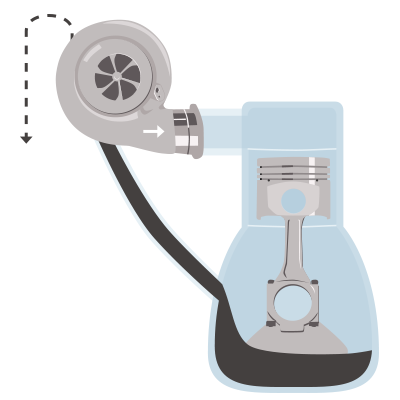
- Low pressure in compressor housing
- Low pressure in turbine housing
- Exhaust system leaks
- EGR system leaks
- Blocked intake or exhaust systems
Oil Flow Restrictions
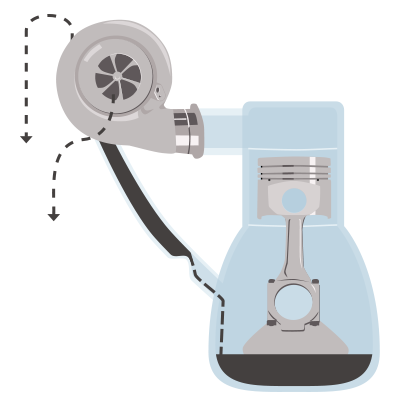
- Blocked or restricted oil drain line
- Twisted, bent, or kinked oil return pipe
- Reused or contaminated oil return pipes
- Clogged bearing housing
These issues can cause oil to back up, leading to leaks from both compressor and turbine ends.
Crankcase Pressure Issues
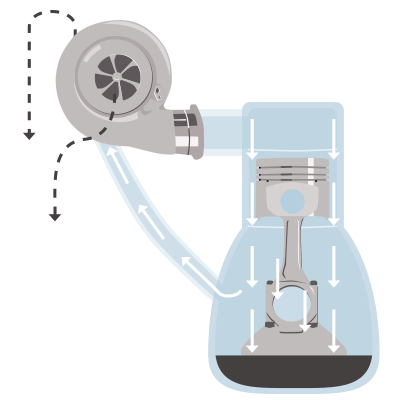
- Excessive crankcase pressure (blow-by from worn rings/bores)
- Blocked crankcase ventilation
- Piston ring blow-by
Increased crankcase pressure disrupts oil drainage and forces oil past seals.
Oil System Problems
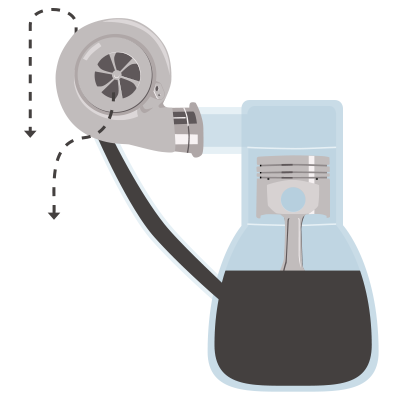
- Excessively high oil pressure
- Overfilled engine oil
- Oil level above manufacturer specification
High oil levels can force oil back up the drain pipe, restrict flow during crankshaft rotation, and cause leaks at both ends of the turbo.
Heat & Contamination
- Carbon buildup (coking) from repeated hot shutdowns
- Dirty or contaminated oil
- Overheating / excessive exhaust gas temperatures (EGTs)
These degrade seals and restrict oil flow.
Mechanical Failures
- Worn or damaged seals (piston rings, O-rings)
- Excessive bearing clearance
- Bearing failure from overheating or load
- Collapsed turbine piston rings
- Cracked or damaged housings (sometimes only visible when hot)
- Warped exhaust flange
Installation & Component Issues
- Incorrect turbocharger application
- Poor-quality or old core components
- Incorrect or poor-quality gaskets
- Use of silicone sealant (can break loose and block oil passages)
- Improper intake pipe or hose installation
- Split or leaking intake hoses
- Dirty or blocked air filters
Where Oil Leaks Occur
Compressor End
- Intake restrictions or leaks
- Dirty or blocked air filter
- Damaged compressor housing
- Incorrect pressure in compressor side
Turbine End
- Exhaust leaks
- Cracks in turbine housing
- Warped flanges
- Incorrect turbine-side pressure
Both Ends
- Oil drain blockage
- High crankcase pressure
- Excessive oil level
- Incorrect turbo installation
Special Conditions That Can Mimic Oil Leaks
Idle Operation
At idle, lower pressure creates a vacuum effect where oil may be drawn into the turbine housing. At normal speeds, pressure stabilizes and the leak often disappears.
VSR (High-Speed) Balancing Machines
Lack of housing pressure during balancing prevents proper sealing, and oil may appear at both ends. This is typically not a real-world leak once installed.
Real-World Failure Examples
- Kinked or blocked oil return: Oil is forced out both ends.
- Overfilled oil: Increased housing pressure and leakage.
- High crankcase pressure: Restricted oil drain and seal failure.
- Pressure imbalance: Leaks at compressor or turbine side.
Preventing Turbocharger Oil Leaks
Maintain Proper Oil Flow
- Ensure oil drain lines are clear and unrestricted
- Avoid reusing contaminated oil pipes
- Maintain correct oil level (never overfill)
Control Pressure Conditions
- Inspect crankcase ventilation system
- Check for excessive blow-by
- Verify pressure balance in intake & exhaust systems
Inspect Air & Exhaust Systems
- Repair exhaust leaks
- Check intake hoses for cracks or improper fitment
- Replace dirty or clogged air filters
Protect Against Heat & Contamination
- Avoid repeated hot shutdowns
- Use clean, high-quality oil
- Monitor for carbon buildup
Use Correct Components
- Install the correct turbocharger for the application
- Use proper gaskets and O-rings
- Never use silicone sealant on oil-related components
Check Emissions Systems
- Ensure DPF and catalytic converter are not blocked
- Address restrictions that affect pressure balance
Final Takeaway
Turbocharger oil leaks are rarely caused by a single failure. They are typically the result of:- Pressure imbalance
- Oil flow restriction
- Excess crankcase pressure
- Installation or system-level issues
Successful repair depends on identifying and correcting the root cause—not just replacing the turbocharger.